It is often said that what foreigners do not understand about Japanese people is their ambiguous expressions. Among them, there is even something called “A-Un,” which is difficult to understand.
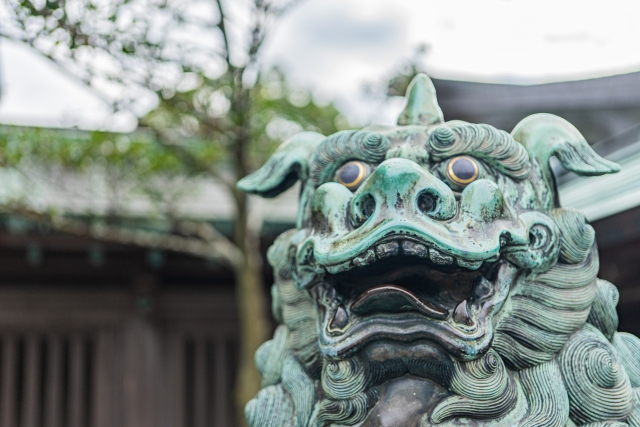
When one hears the phrase “A-Un, 阿吽” what immediately comes to mind are the komainu (guardian dogs) at shrines. If you observe them carefully, you will see that their mouths are indeed shaped like “A” and “Un”. When you think about it, it seems strange that a stone statue at the entrance of a shrine could have such a meaning.
This page will focus on the original meaning of “A-Un” and the meaning of the commonly used expression “A-Un breathing.

Click here to learn Japanese language with the best one-on-one Japanese tutoring lessons in person or online.
What does “A-Un阿吽” mean?
- Un” is a phonetic transcription of the Sanskrit word “a-hum,” which is one of the Buddhist mantras meaning “the beginning and the end of all things.
Sanskrit was a language used in ancient Asia, and its script is called Sanskrit script (bongo). Bongo script is written on stupas (stupas) and other structures.
The first letter of the alphabet is “a” and the last letter is “un,” which is reminiscent of the Japanese character “aiueo.
In Sanskrit, “a” and “un” were thought to represent the beginning and end of the universe, respectively, since “a” is the first sound produced when the mouth is opened and “un” is the last sound produced when the mouth is closed.
A” is sometimes compared to truth and reason, and “¡un” to the wisdom and virtue they guide.
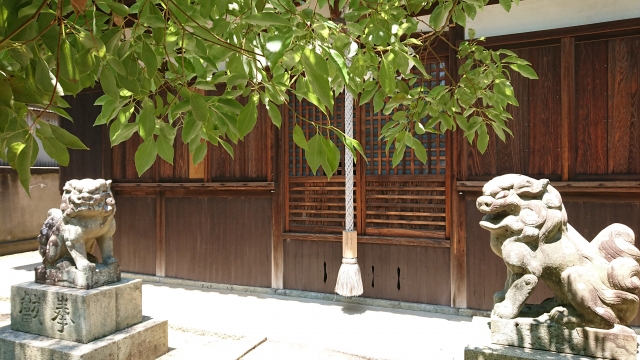
A-Un is also used to represent a pair of objects, and is incorporated in religious statues that are placed in pairs.
In the case of statues, the one with its mouth open is called “A-Un” and the one with its mouth closed is called “Un. Examples of such statues are as follows
- Komainu (guardian dogs) 狛犬
- Niou statues 仁王像
- Shisa statues シーサー像
Komainu are imaginary creatures often seen at the entrances of shrines and temples. The most common combination is a lion (a-form) on the right and a guardian dog (un-form) on the left.
There are various theories as to the origin of the komainu, and some say that they came to be called “komainu” (guardian dogs) because they were used to ward off evil spirits.
Niou statues are often placed at the entrances of temples in pairs (A- and Un-gata), and are often called “Niomon” (Niomon Gate). Although generally called “Niomon” or “Nio,” they are originally Buddhist guardian deities. Shisa is characterized by his expression and physique as a deity that protects temples.
Shisa is an imaginary creature that inhabits Okinawa. They are meant to ward off evil and are often placed on roofs. Sometimes a pair of A-gata and Un-gata are placed on the roof.
What is the meaning of “A-un’s breathing : 阿吽の呼吸“?
A阿” is the sound produced by opening the mouth, and “A-Un 阿吽” is the sound produced by closing the mouth, so the two together mean “exhale and inhale,” or “breath.
This is the meaning of “breath” or “respiration.” When two people breathe in and out and act as if they are breathing perfectly together, it is called “A-Un breathing.
Similar expressions include “tsuka no naka, つかのまの仲” “tsuka ai no naka, つかあいの仲” and “tsuka ai wa naka. つかあいは仲” The meaning of “tsukaeru” is “to get along well and be immediately recognizable with a single word.
In this case, the prevailing theory is that “tsu, ka, a” has no special meaning, but was used simply as a sound and has nothing to do with “a-un.
Conclusion
A-un阿吽 is a phonetic transcription of the Sanskrit word “a-hum,” meaning “the beginning and end of all things” or “the beginning and end of the universe.
It means two people who act as if they are breathing together.
Related article: