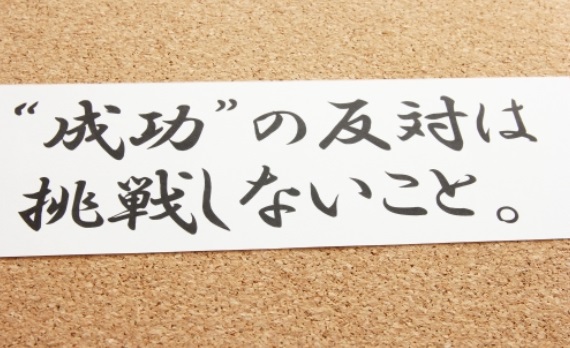
"The key to studying"
学習のカギ

The key to studying

Learning Tips 1. Clarify your goals for learning Japanese.

Set your learning goals as small as you can achieve them. How much will you master by when? Let’s plan.


Learning Tips 2. Make it a habit to practice Japanese a little every day.

It is very difficult to study alone. Stay motivated by studying with a good teacher, tutor, or friend.


Learning Tips 3. Enjoy the process of improving.

Look forward to the adventure of meeting new people and cultures. Language is not an academic discipline.


Some facts about the Japanese​

Japanese pronunciation is simple fairly and the grammar is not as complicated as in other languages.

In Japanese conversation, you don’t have to say the subject of a sentence every time, and you can talk with just verb sentences and adjective sentences.
 
Therefore, it is said in this sense that Japanese is easier to learn than other languages.
 
Japanese people often use honorifics(forms of politeness in language) and gender words depending on the position of the speaker, in society and often prefer specific ambiguous expressions and unclear answers.
 
This is one of the reasons why the texts in the textbooks are different from the words actually spoken.
 

If you have any questions, ask them for free! ➡ Japanese Question Form

KEY:

  • Set the learning goal small enough to achieve it.
  • Make it a habit to study.
  • Output what you have learned.
  • Use Japanese outside of the study.
  • 学習目標を達成可能な程小さく設定する。
  • 勉強することを習慣化する。
  • 勉強したことをアウトプットする。
  • 勉強以外でも日本語を使う。
japanese tutoring HH JapaNeeds logo

Find a Japanese Tutor at HH JapaNeeds​

One-on-one lessons can be arranged according to an individual’s level and purpose, and you can ask questions and solve anything you do not understand on the spot.
Face-to-face tutoring is recommended, and you can also choose online lessons. With access to the internet, you can connect with Japanese teachers wherever you are.
 
 
Location of face-to-face lessons:
 
Partner class: The most common location is a local café (Starbucks, etc.) that is convenient for the student.
 

Pro class: The most common location is the office of the student’s company. Some students use their homes or nearby cafes.

Hybrid learning is available, combining in-person and online learning with your Japanese tutor.

 
Nihongo Hiragana Japanese language grammar

Hiragana

Japanese has no “tone” at all.         ひらがな 日本語を学ぶための最初のステップは、アルファベットを学ぶことです。または、少なくとも、その言語に存在する音を学ぶために。他の多くのアジア言語のように、日本語には「声調」はまったくありません。アルファベットには、後で説明する2つの例外しかありません。日本語のアルファベットには文字は含まれていませんが、代わりに文字が含まれており、技術的にはアルファベットではなく文字セットです。下の表の文字はひらがなと呼ばれています。ひらがなは、日本語の主要なアルファベットまたは文字セットです。日本語には、他に2つの文字セットがあります。後で説明する漢字(漢字)と、主に外国語に使用される別のアルファベット/文字セットのカタカナです。カタカナについてはレッスン2で説明します。ひらがなのすべてのキャラクターを覚えるまで、先に進むのを待たないでください。他のレッスンを続けながら、それらを学びましょう。  日本語には5つの母音があります。 (a)、「ahh」と発音、(i)、「eat」では「e」のように発音、(u)、「soon」では「oo」のように発音、(e)、「elk」では「e」のように発音、および(o)、「oh」と発音します。 (n)を除いて、すべてのひらがな文字はこれらの母音の1つで終わります。英語に似ていない唯一の「子音」は日本語の「r」です。 「d」、「r」、「l」の組み合わせのように少し「巻かれ」ています。  HH JapaNeedsYour tutor. Your
Read More »