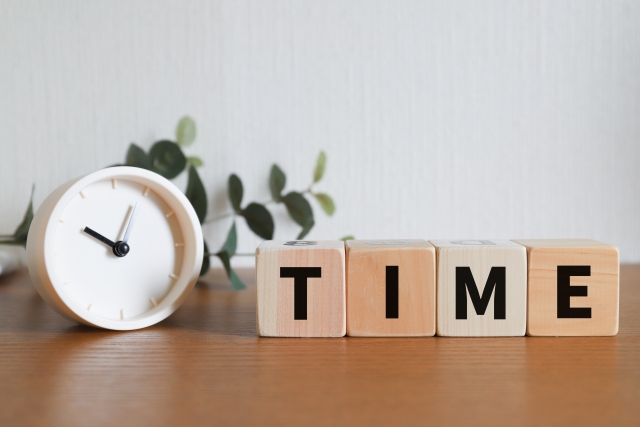
In English-speaking countries, we count time in the form of “one o’clock” or “two o’clock”.
In other cases, “am” and “pm” are used to indicate morning (morning), “seven o’clock am” for afternoon (afternoon), and “seven o’clock pm” for evening (afternoon), and so on.
Naturally, however, the way to say time is different in Japan.
There are many situations in which you tell time at work and in your private life, so if you are going to stay in Japan for a long period of time, you should definitely learn this.
In this article, we would like to explain how to say and use “jikan” in Japanese.

Click here to master Japanese with one-on-one Japanese tutoring lessons in person or online.
What is “jikan” (time) in Japanese language
Let’s start with “how to say time”.
- 1:00「1時(ichiji)」
- 2:00「2時(niji)」
- 3:00「3時(sanji)」
- 4:00「4時(yoji)」
- 5:00「5時(goji)」
- 6:00「6時(rokuji)」
- 7:00「7時(nanaji)(shichiji)」
- 8:00「8時(hachiji)」
- 9:00「9時(kuji)」
- 10:00「10時(jyuuji)」
- 11:00「11時(jyuuichiji)」
- 12:00「12時(jyuuuniji)」
In this list, there are two ways of saying “nanaji” and “shichiji” only for 7:00.
Basically, you can use either one, so remember the one you are more comfortable using.
In Japan, “am” is expressed as “gozen” (a.m.), so you can say “gozenrokuji” (6:00 a.m.) by connecting the two.
However, just saying “rokuji” without “a.m.” is also considered “a.m.” in Japan, because “a.m.” is considered “p.m.” in Japan.
This is because the number after “12” is used for “afternoon”.
In short, “one o’clock pm” is “13:00 (jyuusanji)” in Japan.
In Japan, “one o’clock pm” would be “13:00 (jyuusanji)”. “one o’clock pm (gogoichiji)” is sometimes used with “afternoon” and “1-12:00”, but it is also often said as “13-24”.
The same is true for 13:00 (jyuusanji).
- 14:00 (jyuuyoji)
- 15:00 (jyuugoji)
- 16:00 (jyuurokuji)
- 17:00 (jyuunanaji) (jyuushichiji)
- 18:00 (jyuuhachiji)
- 19:00 (jyuukuji)
- 20:00 (nijyuuji)
- 21:00 (nijyuuichiji)
- 22:00 (nijyuuuniji)
- 23:00 (nijyuusanji)
- 24:00 (nijyuuyoji)
There are many cases where it is used in this way, so it is important to remember both of them as well as the pattern of “X:00 p.m.”.
How to say minutes in Japanese
Now that you understand how to say 1:00 – 24:00, let’s learn how to say “minutes (fun).
In the case of minutes, the number is followed by a “minute,” which can be complicated to read.
The way to say “minute” differs depending on the last word of the number.
- 1 minute (ippun)
- 2 minutes (nifun)
- 3 minutes (sanpun)
- 4 minutes (yonpun)
- 5 minutes gofun
- 6 minutes (roppun)
- 7 minutes (nnafun)
- 8 minutes (hachifun) (happun)
- 9 minutes (kyuufun)
- 10 minutes (jyuppun)
As shown above, “pun” is used for “っ” and “ん”, while “fun” is used in other cases.
This may be quite confusing for foreign nationals.
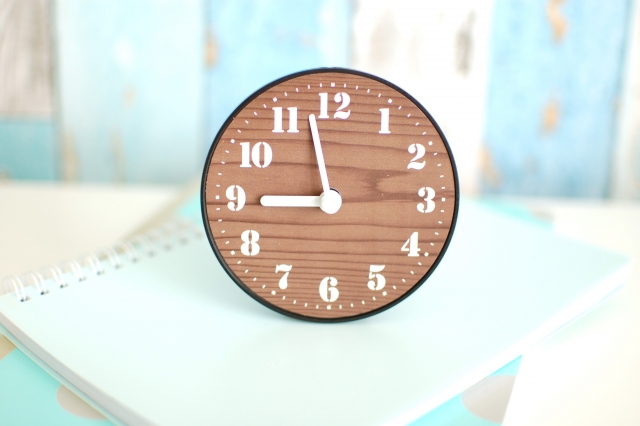
How to say seconds in Japanese
If you can now say “0 hours and 0 minutes,” you should be able to understand “seconds (byou),” and you will have learned a lot of time-related words.
As for seconds, they are not as complicated as “minutes,” so you should be able to use them if you just learn how to say them.
- All seconds from 1 to 60 are counted as “byou”.
Since there are no different ways to say it, it should be very easy to remember.
How to say and use “before” and “after,” which are often used together with “time
In English-speaking countries, “5 minutes ago” is said, but in Japanese, “5 minutes before (gofunmae)” is said.
Also, “after 5 minutes” is said “5 minutes later (gofunngo)” in Japanese.
At work and in private life, “before” and “after” are used quite often, as in “Well, let’s get together again in 30 minutes,” or “We’ll meet 10 minutes before.
Especially at work, time is a very important point, so remember not to make mistakes.
Conclusion
In this article, I have explained how to say and use “jikan” in Japanese. So you could understand how do you say what time is it in japanese?
In the case of saying time in Japanese, it is quite complicated (especially “hour” and “minute”).
However, especially at work, it is necessary to know the time accurately, so please try to learn it.
Related article: